The Verge‘s recent analogy comparing the EV charging landscape to the smartphone charging wars is spot on. What should parking lot owner and managers be watching for?
Just as Apple resisted USB-C before finally adopting it, Tesla’s once-proprietary plug is now being standardized as the North American Charging Standard (NACS). The movement is being driven by market forces, with major automakers like Ford, GM, and others adopting the NACS standard.
This shift is reshaping the EV charging market, forcing real estate owners and parking operators to adapt to new realities in their facilities.
Operators who invest wisely today will be best positioned to maximize revenue and avoid costly retrofits as the industry shifts.
Implications for Parking Owners and Operators
For parking operators, the key challenge is ensuring that EV charging infrastructure remains future-proof while avoiding expensive retrofits. The rapid adoption of NACS means that by 2026, new vehicles will primarily use this standard, but today’s EVs still rely on a mix of CCS and Tesla connectors.
Here’s how property owners can future-proof their EV charging in garages and parking lots:
Deploy Universal, Adaptable Charging Hardware
Purchase chargers compatible with multiple standards (NACS, CCS, and even CHAdeMO where necessary) and look for software-adaptable chargers that can easily integrate new plug types.
Leverage Scalable and Modular Infrastructure
Avoid installing rigid, single-standard stations. Instead, opt for modular solutions that allow for upgrades as new standards emerge.
Prioritize Open Network and Smart Charging Capabilities
Choose networked chargers that support multiple protocols (OCPP-compliant systems), and enable remote monitoring, payment flexibility, and dynamic pricing.
Minimize Upfront Capital Risks:
Partner with providers offering Charging as a Service (CaaS) solutions to reduce financial exposure. Off-balance-sheet models from owner-operators like like XLR8 America ensure infrastructure remains up-to-date without large CAPEX investments.
Plan for Grid and Power Needs
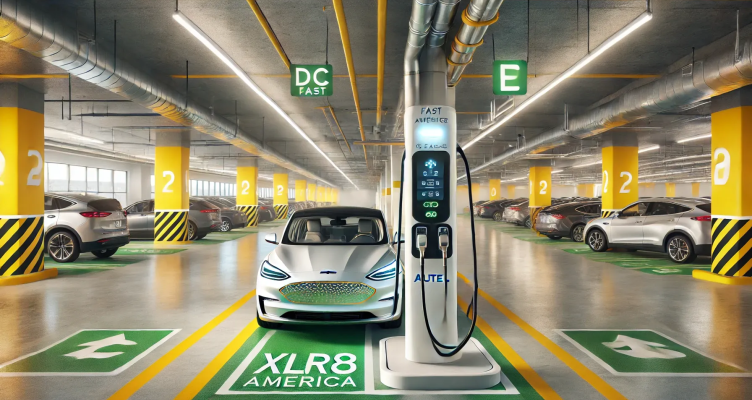
As NACS adoption grows, more high-speed DC fast chargers will be required. They are not for every application, as parking facilities serve different needs based on parking time, demographics, usage. Assess power supply requirements early on to avoid costly electrical upgrades later.
The parking sector of the commercial real estate industry is at a pivotal moment—EV adoption is skyrocketing, and charger standardization presents both challenges and opportunities. Operators who invest wisely today will be best positioned to maximize revenue and avoid costly retrofits as the industry shifts.
Contact us to learn how XLR8 America’s Charging as a Service model frees you up from tracking all the technical details and evolving standards in the rapidly evolving world of EV charging. We own and operate the equipment, so we are incentivized to maintain and maximize usage on your premises. Revenue sharing aligns our incentives with our customers.

The Verge‘s recent analogy comparing the EV charging landscape to the smartphone charging wars is spot on. What should parking lot owner and managers be watching for?
Just as Apple resisted USB-C before finally adopting it, Tesla’s once-proprietary plug is now being standardized as the North American Charging Standard (NACS). The movement is being driven by market forces, with major automakers like Ford, GM, and others adopting the NACS standard.
This shift is reshaping the EV charging market, forcing real estate owners and parking operators to adapt to new realities in their facilities.
Implications for Parking Owners and Operators
For parking operators, the key challenge is ensuring that EV charging infrastructure remains future-proof while avoiding expensive retrofits. The rapid adoption of NACS means that by 2026, new vehicles will primarily use this standard, but today’s EVs still rely on a mix of CCS and Tesla connectors.
Here’s how property owners can future-proof their EV charging in garages and parking lots:
Deploy Universal, Adaptable Charging Hardware
Purchase chargers compatible with multiple standards (NACS, CCS, and even CHAdeMO where necessary) and look for software-adaptable chargers that can easily integrate new plug types.
Leverage Scalable and Modular Infrastructure
Avoid installing rigid, single-standard stations. Instead, opt for modular solutions that allow for upgrades as new standards emerge.
Prioritize Open Network and Smart Charging Capabilities
Choose networked chargers that support multiple protocols (OCPP-compliant systems), and enable remote monitoring, payment flexibility, and dynamic pricing.
Minimize Upfront Capital Risks:
Partner with providers offering Charging as a Service (CaaS) solutions to reduce financial exposure. Off-balance-sheet models from owner-operators like like XLR8 America ensure infrastructure remains up-to-date without large CAPEX investments.
Plan for Grid and Power Needs
As NACS adoption grows, more high-speed DC fast chargers will be required. They are not for every application, as parking facilities serve different needs based on parking time, demographics, usage. Assess power supply requirements early on to avoid costly electrical upgrades later.
The parking sector of the commercial real estate industry is at a pivotal moment—EV adoption is skyrocketing, and charger standardization presents both challenges and opportunities. Operators who invest wisely today will be best positioned to maximize revenue and avoid costly retrofits as the industry shifts.
Contact us to learn how XLR8 America’s Charging as a Service model frees you up from tracking all the technical details and evolving standards in the rapidly evolving world of EV charging. We own and operate the equipment, so we are incentivized to maintain and maximize usage on your premises. Revenue sharing aligns our incentives with our customers.
Riding the EV Wave: Why Parking Operators Can't Afford to Wait (or How to Win Big)
The Rise of 'Plug and Charge' EV Charging Standards: What Parking Operators Need to Know to Stay Ahead