For millions, the allure of electric vehicles is undeniable: quieter rides, instant torque, and freedom from fluctuating gas prices. But for city dwellers, particularly those living in apartments, condos, or relying on street parking, the dream of EV ownership can quickly turn into a logistical nightmare. “Where will I charge it?” becomes a central, anxiety-inducing question.
The current paradigm often forces urban EV owners into a frustrating dance: relying on inconvenient public fast chargers for their daily needs, or endlessly circling for an available station that may or may not work. This “park where you charge” model, where a dedicated trip to a public station is mandatory, is unsustainable for dense urban environments and their populations.
Here’s the stark reality: If convenient charging isn’t available where urban residents live and work, the promise of EV ownership remains largely out of reach for a massive segment of the population.This isn’t just a personal inconvenience; it’s the single biggest barrier to widespread urban EV adoption.
The Urban EV Puzzle: Why the Gas Station Mindset Fails City Life
For single-family homeowners with a garage, charging at home is often synonymous with convenience. They plug in overnight, wake up to a full battery, and rarely think about charging during their day. But for the nearly one-third of U.S. households living in multi-unit dwellings (MUDs), or those relying on street parking, that ideal is a distant fantasy.
Recent research underscores this critical disconnect:
The Charging Gap is Real: A startling survey by SWTCH Energy (September 2024) reveals that U.S. multifamily residents are 2.5 times more likely to own an EV if they have charging available where they live. Conversely, if onsite charging isn’t available, the likelihood of residents planning to own an EV in the next five years plummets from 62% to just 25%. This directly highlights the power of convenient access.
Public Fast Chargers Aren’t the Daily Solution: While essential for road trips, relying on public DC fast chargers for daily top-offs and commuting is inefficient and costly, an issue highlighted by studies from Energy Innovation Policy and Technology LLC and DriveElectric.gov. Drivers face higher per-kWh costs, “charger anxiety” about availability, and the constant hunt for a working station, leading to what some call “EV Musical Chairs.”
The Landlord Dilemma: Governing Magazine (June 2023) notes that less than 5% of apartments and office buildings have chargers available for tenants. Property owners face challenges like high capital costs for retrofitting, limited electrical panel capacity in older buildings, and coordination complexities.
These are not minor hurdles. They represent fundamental friction points that actively discourage urban residents from making the switch to electric, even when they desire to do so for environmental or cost-saving reasons.
“Charge Where You Park”: The Only Viable Solution for Urban Living
The answer to the urban EV puzzle lies firmly in the charge where you park philosophy. This means seamlessly integrating charging into the long periods vehicles are already stationary – primarily overnight at home, or during the workday at employer locations. For urban dwellers, especially those without private garages, this translates to charging options within their apartment complexes, on their streets, or at their workplaces.
Think about EV charging as you do Wi-Fi: You don’t drive to a Wi-Fi hotspot every time you need to connect. You expect it to be available, reliably and affordably, where you live, work, and visit. EV charging needs to achieve this same level of ubiquitous, seamless integration for urban adoption to truly flourish.
Here’s how Charge Where You Park solves the urban puzzle:
Home Sweet Charge: For MUD residents, providing Level 2 charging directly within their building’s parking garage or lot is paramount. This eliminates the daily hunt for public chargers, reduces stress, and makes EV ownership as convenient as charging a smartphone. This transforms a building from “just a place to live” to a “smart, future-ready home” for EV owners.
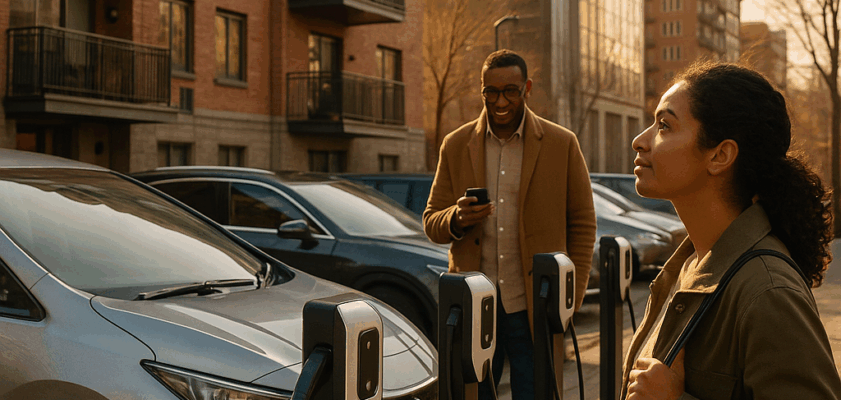
The Curbside Opportunity: For those relying on street parking, innovative solutions like pole-mounted or bollard-style chargers integrated into existing street infrastructure are vital. As a World Economic Forum study highlights, building density itself can be leveraged, using existing power infrastructure to create opportunity charging right on the curb, making EV ownership feasible even without a dedicated parking spot.
Workplace as the Other Half: As we’ve previously discussed, employer-provided charging is the critical complement to home charging, especially for those who lack the latter. An employee can charge their EV during their 8+ hour workday and arrive home with a full battery, regardless of their residential charging access.
The Opportunity: Unlocking Urban Potential
The future of EV adoption hinges on solving the urban charging puzzle. With private investment increasingly driving the market, and state/local initiatives filling gaps where broader policy may shift, the opportunity for property owners, businesses, and charging solution providers is immense.
By investing in “charge where you park” solutions, property owners not only future-proof their assets and enhance property value, but they also directly empower their residents and tenants to embrace sustainable transportation. Businesses that provide this amenity attract and retain talent. It’s about recognizing that the vehicle isn’t just a personal item; its charging needs are a part of the infrastructure of modern life.
Unlocking the city for EVs isn’t about building more gas stations for electric cars. It’s about intelligently integrating charging into the fabric of urban living, making it as seamless and indispensable as Wi-Fi.
Ready to transform your community’s potential and meet the demands of the electrified future? Embrace the ‘charge where you park’ revolution. Contact us to schedule a consultation and learn more.


For millions, the allure of electric vehicles is undeniable: quieter rides, instant torque, and freedom from fluctuating gas prices. But for city dwellers, particularly those living in apartments, condos, or relying on street parking, the dream of EV ownership can quickly turn into a logistical nightmare. “Where will I charge it?” becomes a central, anxiety-inducing question.
The current paradigm often forces urban EV owners into a frustrating dance: relying on inconvenient public fast chargers for their daily needs, or endlessly circling for an available station that may or may not work. This “park where you charge” model, where a dedicated trip to a public station is mandatory, is unsustainable for dense urban environments and their populations.
Here’s the stark reality: If convenient charging isn’t available where urban residents live and work, the promise of EV ownership remains largely out of reach for a massive segment of the population. This isn’t just a personal inconvenience; it’s the single biggest barrier to widespread urban EV adoption.
The Urban EV Puzzle: Why the Gas Station Mindset Fails City Life
For single-family homeowners with a garage, charging at home is often synonymous with convenience. They plug in overnight, wake up to a full battery, and rarely think about charging during their day. But for the nearly one-third of U.S. households living in multi-unit dwellings (MUDs), or those relying on street parking, that ideal is a distant fantasy.
Recent research underscores this critical disconnect:
These are not minor hurdles. They represent fundamental friction points that actively discourage urban residents from making the switch to electric, even when they desire to do so for environmental or cost-saving reasons.
“Charge Where You Park”: The Only Viable Solution for Urban Living
The answer to the urban EV puzzle lies firmly in the charge where you park philosophy. This means seamlessly integrating charging into the long periods vehicles are already stationary – primarily overnight at home, or during the workday at employer locations. For urban dwellers, especially those without private garages, this translates to charging options within their apartment complexes, on their streets, or at their workplaces.
Think about EV charging as you do Wi-Fi: You don’t drive to a Wi-Fi hotspot every time you need to connect. You expect it to be available, reliably and affordably, where you live, work, and visit. EV charging needs to achieve this same level of ubiquitous, seamless integration for urban adoption to truly flourish.
Here’s how Charge Where You Park solves the urban puzzle:
The Opportunity: Unlocking Urban Potential
The future of EV adoption hinges on solving the urban charging puzzle. With private investment increasingly driving the market, and state/local initiatives filling gaps where broader policy may shift, the opportunity for property owners, businesses, and charging solution providers is immense.
By investing in “charge where you park” solutions, property owners not only future-proof their assets and enhance property value, but they also directly empower their residents and tenants to embrace sustainable transportation. Businesses that provide this amenity attract and retain talent. It’s about recognizing that the vehicle isn’t just a personal item; its charging needs are a part of the infrastructure of modern life.
Unlocking the city for EVs isn’t about building more gas stations for electric cars. It’s about intelligently integrating charging into the fabric of urban living, making it as seamless and indispensable as Wi-Fi.
Ready to transform your community’s potential and meet the demands of the electrified future? Embrace the ‘charge where you park’ revolution. Contact us to schedule a consultation and learn more.
Why Charging Is the New Wi-Fi: Unlock Convenience and Value with "Charge Where You Park"
What Investors Need to Know About the EV Charging Gold Rush (And What Will Set Winners Apart)