The buzz around electric vehicles isn’t just about cleaner air or quieter commutes anymore – it’s a bonafide economic gold rush. Market analysis by PwC forecasts that, to accommodate an anticipated 27 million EVs by 2030 and 92 million by 2040, the U.S. EV charging market is poised to grow nearly tenfold by 2030 and expand into a roughly $100 billion industry by 2040. Investors and charge‑point operators are taking note, with public charging networks positioned to capture the lion’s share of that growth. That’s a staggering trajectory, and it’s drawing significant attention from investors eager to stake their claim.
But as with any gold rush, not every opportunity is created equal. The biggest winners in the EV charging space won’t just be those who get there first. Those most likely to benefit will be the ones who understand that long-term success isn’t about hype; it’s about building enduring value through fundamental strengths: scalable infrastructure, seamless user experience, and strategic local intelligence.
Beyond the Hype: Fundamentals That Matter
In a rapidly expanding market, it’s easy to be dazzled by large-scale announcements or ambitious rollouts. Smart investors look deeper. Based on our experience, the true differentiators for success in EV charging lie in a few critical areas:
Scalable Infrastructure that Meets Real-World Needs: The market needs millions more charge points, not just a handful of highly visible fast chargers. While Level 3 DC fast chargers are crucial for long-haul travel, the vast majority of daily charging happens over longer dwell times – at work, at retail centers, or at multi-family residences. This is the heart of the Charge Where You Park revolution we champion at XLR8.
Financial Scalability: Companies that can efficiently deploy and manage vast networks of Level 2 chargers, combined with strategically placed DCFC where appropriate, will capture the broadest market. This requires flexible, cost-effective models that avoid massive upfront capital expenditures. Charging as a Service (CaaS) revenue-share models, like those offered by XLR8, allows for rapid expansion without overburdening individual sites with CapEx, making widespread deployment achievable.
Seamless User Experience (UX): Reliability: Reliability of public chargers is a persistent pain point, with estimates suggesting around 1 in 5 charging attempts can fail. This isn’t just an inconvenience; it erodes driver confidence and slows adoption. A positive user experience, encompassing ease of use, intuitive design, and, most importantly, rock-solid reliability, is paramount. Invest in companies that prioritize uptime, proactive maintenance, and user-friendly software. Platforms offering features like remote monitoring, quick diagnostics, and clear payment processes will deliver a smooth, frustration-free charging experience – fostering repeat usage and positive word-of-mouth, which is invaluable in any developing market.
Strategic Partnerships & Local Intelligence: The EV charging landscape is too vast and complex for any single entity to dominate alone. Strategic partnerships — with utilities, local businesses, property owners, and even automakers — are crucial for securing prime locations, optimizing power delivery, and ensuring market penetration. Understanding the nuances of local demand, regulations, and incentives (like state or utility programs, especially as federal policies evolve) is a significant competitive advantage.
Look for companies that demonstrate strong capabilities in forming these critical alliances and possess deep local market knowledge. This real-world intelligence is essential for identifying optimal charging sites locations and navigating regional complexities. EV investment isn’t just about financial return; it’s about integrating into existing business ecosystems, providing value to property owners and businesses, and ultimately accelerating the market through collaboration.
The CaaS Advantage: Building to Last
In this fast-paced market, the Charging as a Service (CaaS) model stands out as a particularly compelling investment strategy, addressing many core challenges head-on:
Eliminates Upfront CapEx for Hosts: By converting capital expenditure into predictable operational expenditure, CaaS lowers the barrier to entry for businesses and property owners to deploy chargers. This accelerates market penetration.
Built-in Incentives for Reliability: The CaaS provider’s revenue is tied to charger uptime and utilization, creating a strong motivation to maintain robust, operational networks. This directly tackles the industry’s reliability issues.
Recurring Revenue Streams: For investors, CaaS offers attractive, stable, recurring revenue streams, much like the successful Software-as-a-Service (SaaS) and Solar-as-a-Service models. This predictability is highly appealing in a dynamic sector.
The EV charging gold rush is real, and the growth projections are staggering. But it’s not just about the volume of chargers. The true winners in this space will be companies that prioritize scalable, reliable infrastructure, seamless user experiences, strategic partnerships built on local intelligence. XLR8 America is proud to lead the path forward in this space.
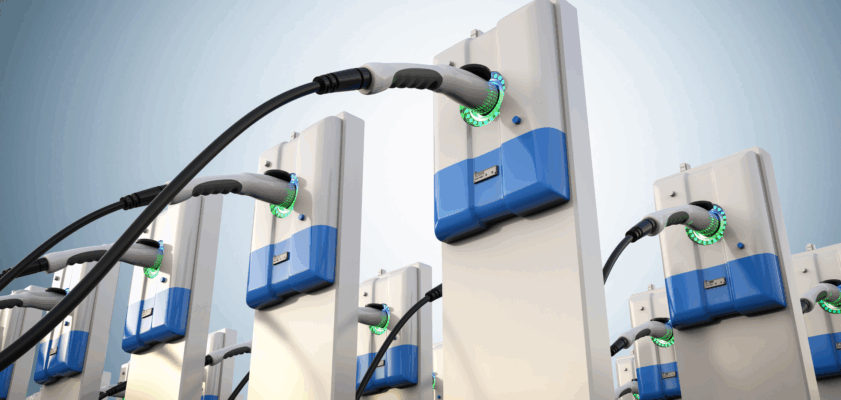


The buzz around electric vehicles isn’t just about cleaner air or quieter commutes anymore – it’s a bonafide economic gold rush. Market analysis by PwC forecasts that, to accommodate an anticipated 27 million EVs by 2030 and 92 million by 2040, the U.S. EV charging market is poised to grow nearly tenfold by 2030 and expand into a roughly $100 billion industry by 2040. Investors and charge‑point operators are taking note, with public charging networks positioned to capture the lion’s share of that growth. That’s a staggering trajectory, and it’s drawing significant attention from investors eager to stake their claim.
But as with any gold rush, not every opportunity is created equal. The biggest winners in the EV charging space won’t just be those who get there first. Those most likely to benefit will be the ones who understand that long-term success isn’t about hype; it’s about building enduring value through fundamental strengths: scalable infrastructure, seamless user experience, and strategic local intelligence.
Beyond the Hype: Fundamentals That Matter
In a rapidly expanding market, it’s easy to be dazzled by large-scale announcements or ambitious rollouts. Smart investors look deeper. Based on our experience, the true differentiators for success in EV charging lie in a few critical areas:
Scalable Infrastructure that Meets Real-World Needs: The market needs millions more charge points, not just a handful of highly visible fast chargers. While Level 3 DC fast chargers are crucial for long-haul travel, the vast majority of daily charging happens over longer dwell times – at work, at retail centers, or at multi-family residences. This is the heart of the Charge Where You Park revolution we champion at XLR8.
Financial Scalability: Companies that can efficiently deploy and manage vast networks of Level 2 chargers, combined with strategically placed DCFC where appropriate, will capture the broadest market. This requires flexible, cost-effective models that avoid massive upfront capital expenditures. Charging as a Service (CaaS) revenue-share models, like those offered by XLR8, allows for rapid expansion without overburdening individual sites with CapEx, making widespread deployment achievable.
Seamless User Experience (UX): Reliability: Reliability of public chargers is a persistent pain point, with estimates suggesting around 1 in 5 charging attempts can fail. This isn’t just an inconvenience; it erodes driver confidence and slows adoption. A positive user experience, encompassing ease of use, intuitive design, and, most importantly, rock-solid reliability, is paramount. Invest in companies that prioritize uptime, proactive maintenance, and user-friendly software. Platforms offering features like remote monitoring, quick diagnostics, and clear payment processes will deliver a smooth, frustration-free charging experience – fostering repeat usage and positive word-of-mouth, which is invaluable in any developing market.
Strategic Partnerships & Local Intelligence: The EV charging landscape is too vast and complex for any single entity to dominate alone. Strategic partnerships — with utilities, local businesses, property owners, and even automakers — are crucial for securing prime locations, optimizing power delivery, and ensuring market penetration. Understanding the nuances of local demand, regulations, and incentives (like state or utility programs, especially as federal policies evolve) is a significant competitive advantage.
Look for companies that demonstrate strong capabilities in forming these critical alliances and possess deep local market knowledge. This real-world intelligence is essential for identifying optimal charging sites locations and navigating regional complexities. EV investment isn’t just about financial return; it’s about integrating into existing business ecosystems, providing value to property owners and businesses, and ultimately accelerating the market through collaboration.
The CaaS Advantage: Building to Last
In this fast-paced market, the Charging as a Service (CaaS) model stands out as a particularly compelling investment strategy, addressing many core challenges head-on:
The EV charging gold rush is real, and the growth projections are staggering. But it’s not just about the volume of chargers. The true winners in this space will be companies that prioritize scalable, reliable infrastructure, seamless user experiences, strategic partnerships built on local intelligence. XLR8 America is proud to lead the path forward in this space.
Unlocking Cities: How “Charge Where You Park” Solves Urban EV Charging Dilemmas